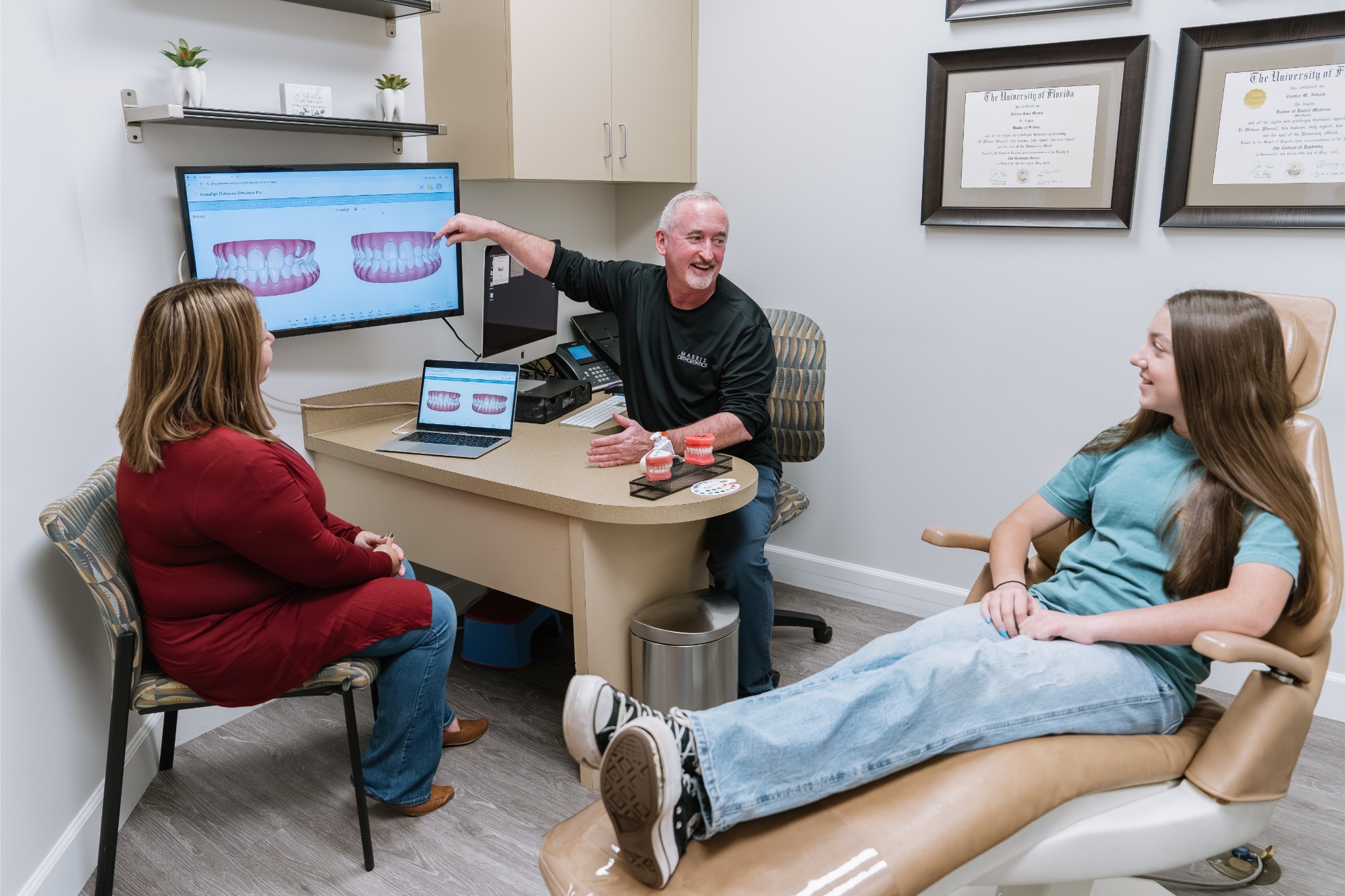
Wondering when your child should first see an orthodontist? The American Association of Orthodontists (AAO) recommends every child have a first orthodontist visit by age 7. That early check-up gives Dr. Kary Marris a clear look at how your child’s jaw, bite, and adult teeth are developing, long before serious concerns can take hold.
At Marris Orthodontics, that first visit is relaxed, quick, and free. Most kids don’t walk out with braces that day. They walk out with answers, and parents walk out with a plan.
What Is an Early Orthodontic Evaluation?
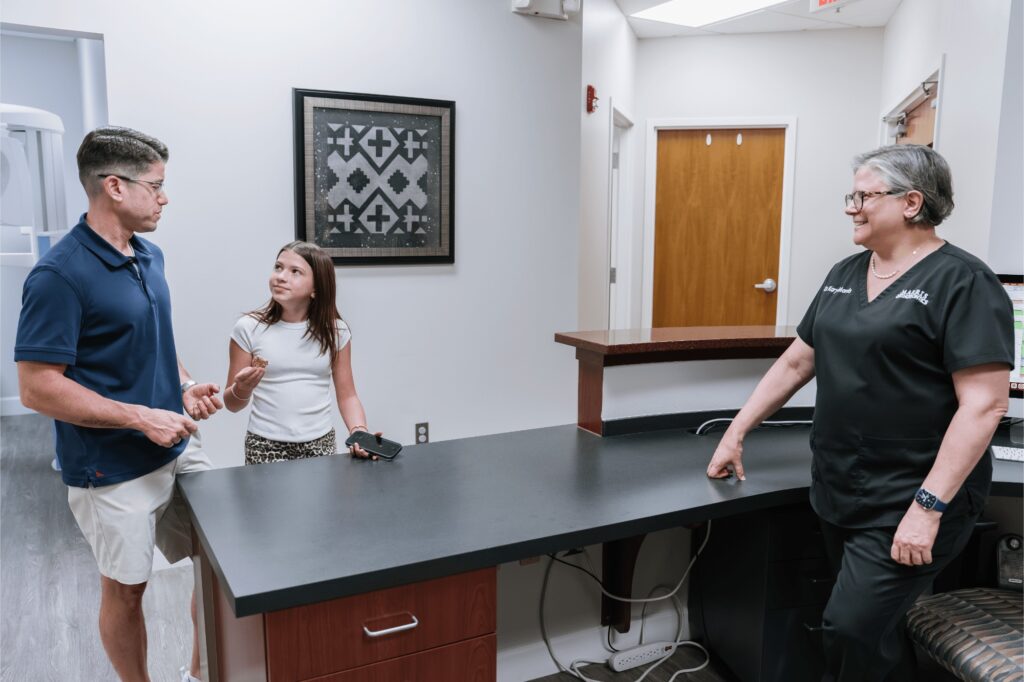
An early orthodontic evaluation is a short exam that checks your child’s jaw growth, bite alignment, and tooth eruption patterns, usually around age 7. It’s different from a dental cleaning. Dr. Kary Marris isn’t looking for cavities. She’s looking at how everything is lining up as adult teeth come in.
Here’s what makes this age 7 evaluation so useful:
- The AAO recommends every child have a first orthodontic check by age 7
- Dr. Marris evaluates jaw growth, bite, spacing, and eruption patterns
- The visit does not mean your child will get braces, most kids are simply monitored
- It’s quick, low-pressure, and complimentary at our Orlando practice
Think of it as a baseline. Even if nothing needs to happen now, we’ll know what to watch for later. That early knowledge is one of the biggest advantages of seeing a pediatric orthodontist early.
Why Age 7? How Early Orthodontic Screening Works
Age 7 is the sweet spot because your child’s first permanent molars have usually come in, setting the back bite. There’s a mix of baby and adult teeth, which gives Dr. Kary Marris a clear window into how growth and alignment are tracking. The mid-palatal suture is also still open, so gentle expansion is possible if it’s ever needed.
Here’s what a first orthodontist visit for kids actually looks like at our Orlando practice:
- Check-in and welcome. Our crew greets you and your child, answers questions, and gets everyone settled.
- Quick 3-D scans and digital images. No messy molds. Just a quick wand that captures your child’s smile in minutes.
- Exam with Dr. Marris. She reviews the scans, checks jaw growth, looks at tooth position, and watches how the bite closes.
- Parent conversation. We explain what we see in plain language and answer every question.
After the exam, there are three possible outcomes:
- No treatment needed. Everything looks great. See you at the next checkup.
- Start Phase 1 orthodontics. A short, focused early treatment to guide growth or correct a specific concern.
- Growth monitoring. Your child joins our complimentary observation program so we can track development over time.
For growth monitoring, we may use DentalMonitoring, which lets your child snap photos from home between in-office check-ins. It’s part of our all-digital workflow and keeps families from making unnecessary trips to our Orlando practice.
Benefits of an Early Orthodontic Visit
The real power of early orthodontic treatment is timing. When Dr. Kary Marris can guide growth while jaw bones are still flexible, she can keep small issues from turning into bigger ones later.
Here are the biggest benefits of an early visit:
- Guides jaw growth while bones are still responsive. Younger jaws respond well to gentle, strategic shaping, something that’s much harder to do once growth slows down.
- May reduce the need for extractions or jaw procedures later. Addressing crowding or bite issues early can mean fewer invasive steps during the teen years.
- Catches airway and breathing concerns early. Mouth breathing, snoring, and narrow palates can affect sleep and development. Early screening gets these on the radar.
- Protects protruding front teeth. Kids with front teeth that stick out are more likely to chip or injure them during sports or play. Early correction lowers that risk.
- Supports confidence before social pressures peak. Kids become more self-aware as they get older. Addressing noticeable smile concerns early can protect self-esteem.
- Often shortens Phase 2 treatment. When Phase 1 does its job, teen braces or Invisalign later tend to be shorter and simpler.
Not every child needs active treatment at age 7. But every child benefits from knowing where they stand. That’s the quiet value of this visit, you get a roadmap before you need one.
Signs Your Child Should See an Orthodontist Now
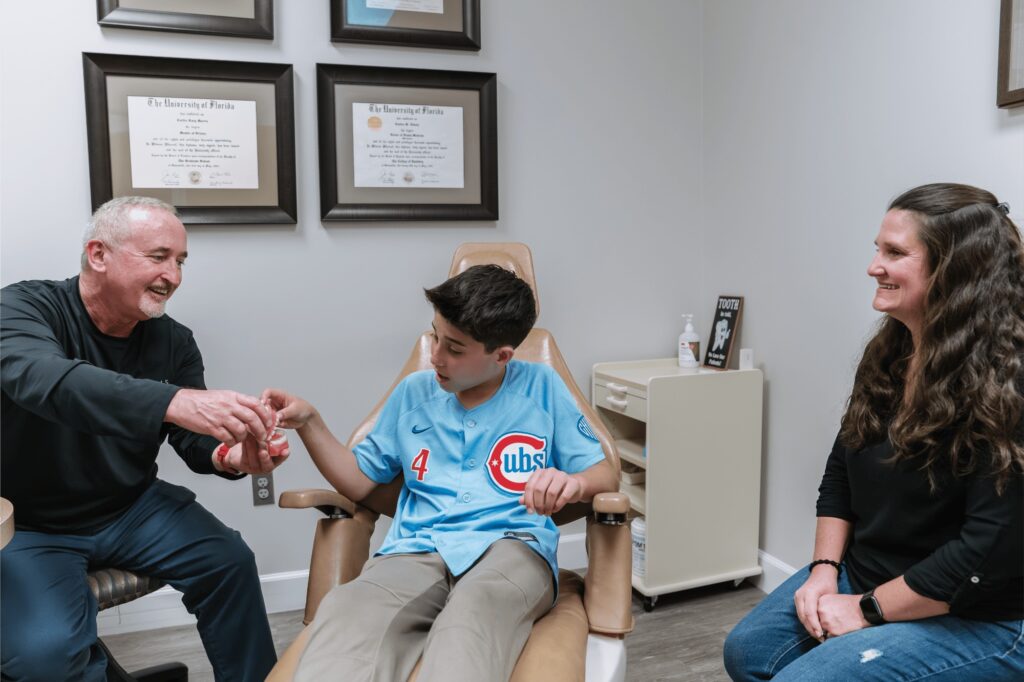
Some kids show clear signs that an orthodontic look is a smart next step, even before age 7. If you notice any of these at home, it’s worth scheduling a free smile check with Dr. Marris sooner rather than later.
Signs your child may need braces or an early evaluation:
- Baby teeth lost very early or still hanging on past age 7 or 8
- Trouble chewing, biting, or noticeable speech concerns
- Mouth breathing, loud snoring, or restless sleep
- Thumb sucking or pacifier use past age 5
- Crowded, overlapping, or blocked-out teeth
- Front teeth that visibly stick out or don’t meet when the mouth closes
- An overbite, underbite, or crossbite you can see
- A jaw that shifts to one side when biting down
- Jaws that pop, click, or look asymmetrical
Quick Reference: What You See vs. What It Might Mean
| What You Notice at Home | What It Could Point To |
|---|---|
| Mouth breathing or snoring | Narrow palate or airway concern |
| Front teeth that stick out | Overbite or protrusion risk |
| Jaw shifts when biting | Crossbite or bite misalignment |
| Crowded or blocked teeth | Spacing or eruption issue |
| Prolonged thumb sucking | Palate shape or open bite concern |
| Chewing on one side | Bite imbalance |
None of these mean your child definitely needs braces. They just mean a professional look is a smart move. Dr. Marris will tell you honestly whether it’s time to act or time to watch.
Does Every Child Need Phase 1 Treatment?
Short answer: no. Most kids don’t need Phase 1 orthodontics. They just need to be watched as they grow. Dr. Kary Marris typically recommends active early treatment only when there’s a specific reason to act now rather than wait.
Children who may benefit from Phase 1 treatment often have:
- A narrow upper palate or crossbite
- Severe crowding with no room for incoming adult teeth
- A significant overbite or underbite affecting jaw growth
- Habits like thumb sucking that are shaping the palate
- Airway or breathing concerns tied to jaw structure
When Phase 1 is the right call, treatment options may include:
- Invisalign First. Clear, custom aligners made specifically for younger patients. They can address spacing, crowding, and early bite concerns without braces.
- Invisalign palatal expander. A clear, custom alternative to older-style metal expanders. Gentle, discreet, and effective for widening a narrow palate.
- LightForce clear braces. When fixed appliances are the best fit, Dr. Marris uses custom-printed clear braces designed for your child’s specific anatomy.
For every other child, we offer a complimentary growth monitoring program. Your child checks in with us periodically so Dr. Marris can watch adult teeth erupt and jaw growth progress. If and when it’s time for Phase 2, teen braces or Invisalign, we’re ready. Many families end up skipping Phase 1 entirely and going straight to a shorter teen treatment.
Two-phase treatment isn’t about doing more. It’s about doing the right thing at the right time.
Frequently Asked Questions
What age should my child first see an orthodontist?
The American Association of Orthodontists recommends every child have a first orthodontic visit by age 7. By then, the first permanent molars have usually erupted and Dr. Kary Marris can get a clear picture of jaw growth, bite development, and how adult teeth are coming in. Earlier visits are also fine if you notice specific concerns.
Does my child need a referral from the dentist?
No referral needed. You can book your child’s free smile check at Marris Orthodontics directly, whether or not your family dentist has suggested it. Many parents reach out on their own after noticing crowding, bite issues, or thumb-sucking habits at home.
Will my child get braces at the first visit?
Usually not. The first visit is an evaluation, not a treatment appointment. Most kids leave with either a “see you next year” or a spot in our growth monitoring program. Only a small group needs to start Phase 1 treatment right away, and even then, we take time to explain everything before anything begins.
What if my child still has mostly baby teeth?
Still a great time to come in. In fact, that mix of baby and adult teeth is exactly what Dr. Marris wants to see. It gives her the clearest view of how growth is progressing and lets her spot concerns before they grow into bigger ones. You’re not too early.
How long does Phase 1 treatment take?
When Phase 1 orthodontics is recommended, it typically runs about 6 to 12 months. It’s shorter and more focused than full braces because the goal is specific, guiding growth, correcting a crossbite, or creating space. After Phase 1, your child enters a resting period until adult teeth finish coming in.
Is the first consultation free at Marris Orthodontics?
Yes. Your child’s first visit at Marris Orthodontics is a free smile check, including the exam, 3-D scans, and Dr. Marris’s recommendations. No referral and no pressure. We want families to feel welcome asking questions long before any treatment decision.
Ready to Schedule Your Child’s First Visit?
If your child is around age 7, or if you’ve noticed any of the signs above, today’s a good time to come see us. Dr. Kary Marris and our crew would love to meet your family at our Orlando practice in Waterford Lakes, located at 12780 Waterford Lakes Parkway, Suite 130. Give us a call at (407) 275-3330 or book your free smile check online, it only takes a minute.
Healthy smiles, friendly faces, that’s what we’re here for.