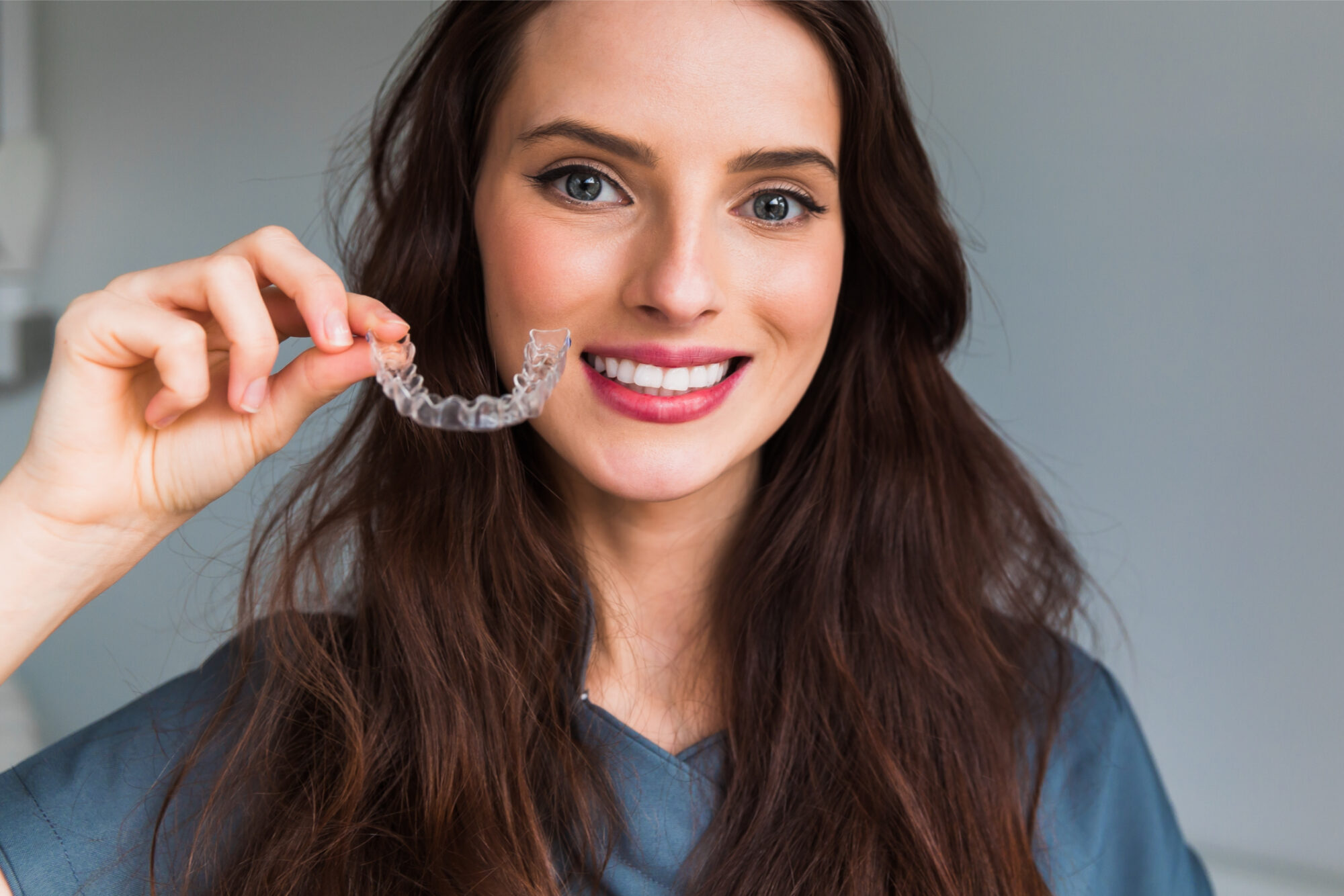
Am I a candidate for Invisalign? Most teens and adults with mild to moderate crowding, spacing, or bite issues qualify. Candidacy depends on three things: how complex your case is, whether your teeth and gums are healthy, and how consistently you’ll wear your trays 20 to 22 hours a day.
What Does It Mean to Be an Invisalign Candidate?
Being a candidate simply means two things line up. First, the movements your teeth need fall within what clear trays can handle predictably. Second, your mouth is healthy enough to start today rather than after other dental work.
Invisalign clear aligners use SmartTrack thermoplastic trays, often paired with small tooth-colored attachments, to guide teeth into better positions a little at a time. The trays come out for meals and brushing, then go right back in.
Cases we regularly treat with aligners include:
- Crowded teeth
- Gaps and spacing
- Overbite and underbite (mild to moderate)
- Crossbite and open bite
- Relapse after braces, when teeth have shifted back
Here’s the honest part. No online quiz can confirm candidacy. Dr. Kary Marris needs a quick 3-D scan, X-rays, and a look at your bite before saying yes. That exam catches things a photo can’t, like root position, gum health, and how your jaws fit together at rest.
How Invisalign Determines If You Qualify: The Evaluation Process
Confirming Invisalign candidacy takes one visit. Dr. Marris examines your teeth, bite, and gum health, captures a quick 3-D scan and X-rays, then reviews a digital simulation of how your teeth would move. If aligners fit your case, you’ll see a projected result and an estimated timeline before you commit to anything.
Here’s how the free consult goes at Marris Orthodontics:
- Visual exam. Dr. Marris checks tooth alignment, bite relationship, gum health, and any existing dental work.
- Quick 3-D scans. A handheld wand builds a digital model of your mouth in minutes. No putty trays, no gagging.
- 3-D treatment simulation. You watch a projected preview of tooth movement, stage by stage, plus a realistic time estimate.
- Candidacy answer. Dr. Marris confirms whether Invisalign clear aligners will do the job, explains where attachments go, and flags any refinement trays you might need near the end.
- Fabrication and follow-up. Your custom plan goes to the lab, and once you start wearing trays, DentalMonitoring lets you snap, send, & smile from home between in-office check-ins.
That last step matters more than people expect. Weekly photos through the app mean Dr. Marris spots a tray that isn’t tracking early, instead of six weeks later at your next visit.
Signs You’re a Good Invisalign Candidate
Good candidates share a few practical traits. Read through this list and see how many sound like you.
What makes someone a strong Invisalign candidate?
- Mild to moderate crowding or spacing. A few millimeters of movement per arch is well within what aligners handle.
- Healthy teeth and gums. No untreated decay, no active gum disease. Both need to be handled first, and your general dentist can usually take care of that quickly.
- All permanent teeth have come in. Adults and most teens fit here. Growing kids with a mix of baby and adult teeth may qualify for Invisalign First instead.
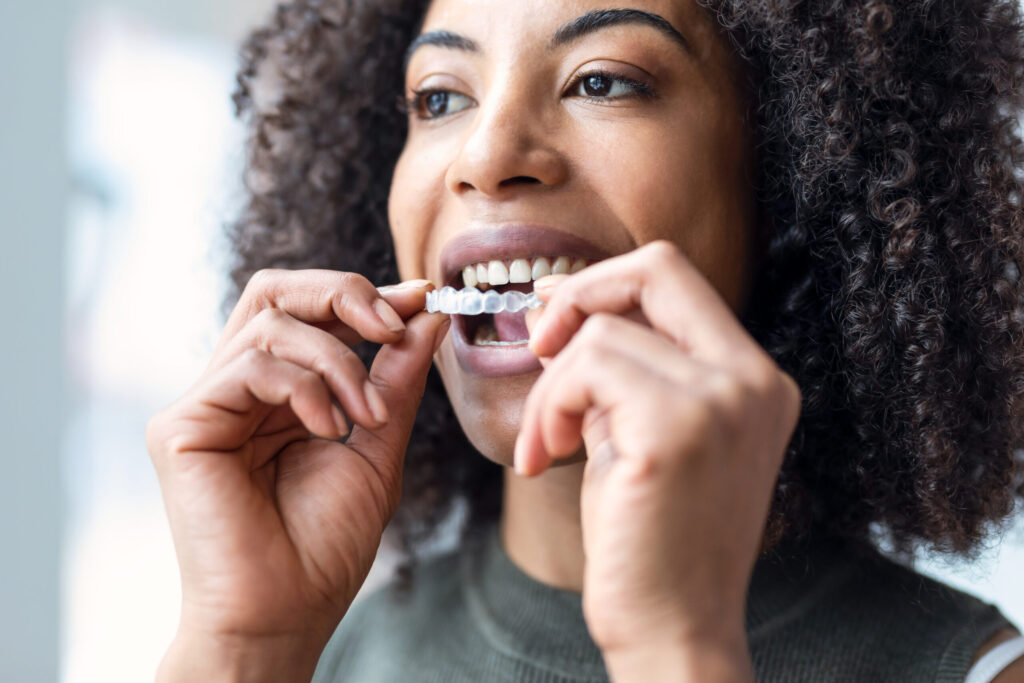
- You’ll actually wear them. Aligners work 20 to 22 hours a day, coming out only for eating, drinking anything but water, and brushing.
- You want something discreet. Job interviews, senior photos, wedding season, courtroom work, sports team pictures. Clear trays keep treatment quiet.
- Solid brushing habits. Trays trap whatever’s on your teeth, so twice-daily brushing and flossing keep everything clean underneath.
- You can keep up with check-ins. Between the DentalMonitoring app and periodic in-office visits, staying on track takes very little of your week.
Does daily wear time really decide the result?
Compliance is the real dividing line. The trays are comfortable and easy to forget about after a day or two, which cuts both ways. Teens who leave them in a napkin at lunch may do better with fixed braces, and there’s no shame in that.
Invisalign vs. Clear Braces: Which Fits Your Case?
Both options straighten teeth. They just get there differently.
| Feature | Invisalign clear aligners | LightForce clear braces |
|---|---|---|
| Visibility | Nearly invisible trays | Tooth-colored, 3-D printed brackets that blend in |
| Removable | Yes, for eating and brushing | No, fixed until treatment ends |
| Best for | Mild to moderate crowding, spacing, relapse after braces | Complex rotations, impacted teeth, larger bite corrections |
| Hygiene | Brush and floss normally with trays out | Requires threaders and careful brushing around brackets |
| Compliance factor | Results depend on daily wear time | Works around the clock, no remembering required |
| Check-ins | DentalMonitoring plus periodic visits | DentalMonitoring plus periodic visits |
Invisalign shines when the movements are moderate and you want treatment nobody notices. LightForce clear braces, custom-printed for each individual tooth, handle the heavy lifting: severely rotated teeth, teeth that need to be pulled down into the arch, bigger bite work.
Some plans use both. A short phase in braces can correct the tough movements, then aligners finish the detailing. Dr. Marris, a LightForce Authorized Provider and Invisalign Provider, will tell you straight which route gets the better result for your specific bite.
DentalMonitoring pairs with both, so your calendar stays open. Either way, Marris Orthodontics builds the plan digitally from the start.
When Invisalign May Not Be the Right Fit
Aligners aren’t the answer for every mouth, and a good orthodontist will say so.
- Severe skeletal bite discrepancies. When the jaws themselves are mismatched, aligners alone won’t correct the underlying structure. Braces, an Invisalign palatal expander, or coordinated care with a specialist may be recommended.
- Large vertical movements or major rotations. Pulling a tooth down into the arch or spinning a stubborn premolar is bracket territory.
- Untreated decay or gum disease. These get resolved first. Straightening teeth on an unhealthy foundation isn’t a good idea.
- Extensive restorative work. Bridges and certain crowns limit where attachments can bond, which narrows what aligners can accomplish.
- Inconsistent wear. Younger teens juggling school, sports, and everything else sometimes do better with fixed braces that never come out.
Getting a “not this time” answer doesn’t end the conversation. Growing kids may be great candidates for Invisalign First. An Invisalign palatal expander can widen a narrow upper arch with smooth trays instead of metal hardware and daily key turns. LightForce clear braces stay discreet while handling movements aligners can’t.
How to Get a Straight Answer About Your Smile
Twenty minutes at Marris Orthodontics gets you a real answer instead of a guess. Dr. Kary Marris, University of Florida trained and a member of the American Association of Orthodontists, brings 20 years of local expertise to every case. She’ll scan your teeth, walk you through the simulation, and tell you honestly whether Invisalign clear aligners, LightForce clear braces, or a combination will get you the best result.
No pressure, no cost, no strings. Just healthy smiles, friendly faces.
Families are welcome to book a free consult at your all-digital orthodontic practice whenever you’re ready to find out.
Frequently Asked Questions About Invisalign Candidacy
How do I know if I’m a candidate for Invisalign?
A free consult with a quick 3-D scan and X-rays gives you a definitive answer. Dr. Kary Marris reviews your bite, tooth positions, and gum health, then shows you a digital simulation of projected movement. You’ll leave knowing whether aligners fit your case and roughly how long treatment would take.
Can teens get Invisalign?
Yes. Invisalign Teen trays include blue compliance indicators that fade as they’re worn, so parents and Dr. Marris can see wear time at a glance. Teens also get replacement trays built into their plan, which helps when one goes missing on a school trip. Motivation matters most here.
Can kids get Invisalign?
Invisalign First is designed for growing kids with a mix of baby and adult teeth. It can create space, correct crowding early, and guide arch development. The American Association of Orthodontists, in its published public guidance, recommends a first orthodontic check-up by age seven, which is when Dr. Marris can spot whether early treatment would help.
Does Invisalign work for an overbite or underbite?
For mild to moderate cases, yes. Aligners can shift teeth and, with attachments and elastics, improve how the upper and lower arches meet. Severe skeletal discrepancies, where the jaw bones themselves are mismatched, usually call for a different approach. A scan and X-rays tell the difference.
Can I get Invisalign if I had braces before?
Relapse cases are among the most common candidates for aligners. Teeth that drifted after braces, often because retainer wear tapered off, typically need modest movement to get back in line. These cases frequently run shorter than first-time treatment.
How long does Invisalign take?
Most cases run 6 to 18 months, depending on how much movement is needed. Minor spacing or relapse corrections finish on the shorter end. Full bite correction takes longer. Consistent wear is the biggest factor within your control, and skipping hours stretches the timeline.