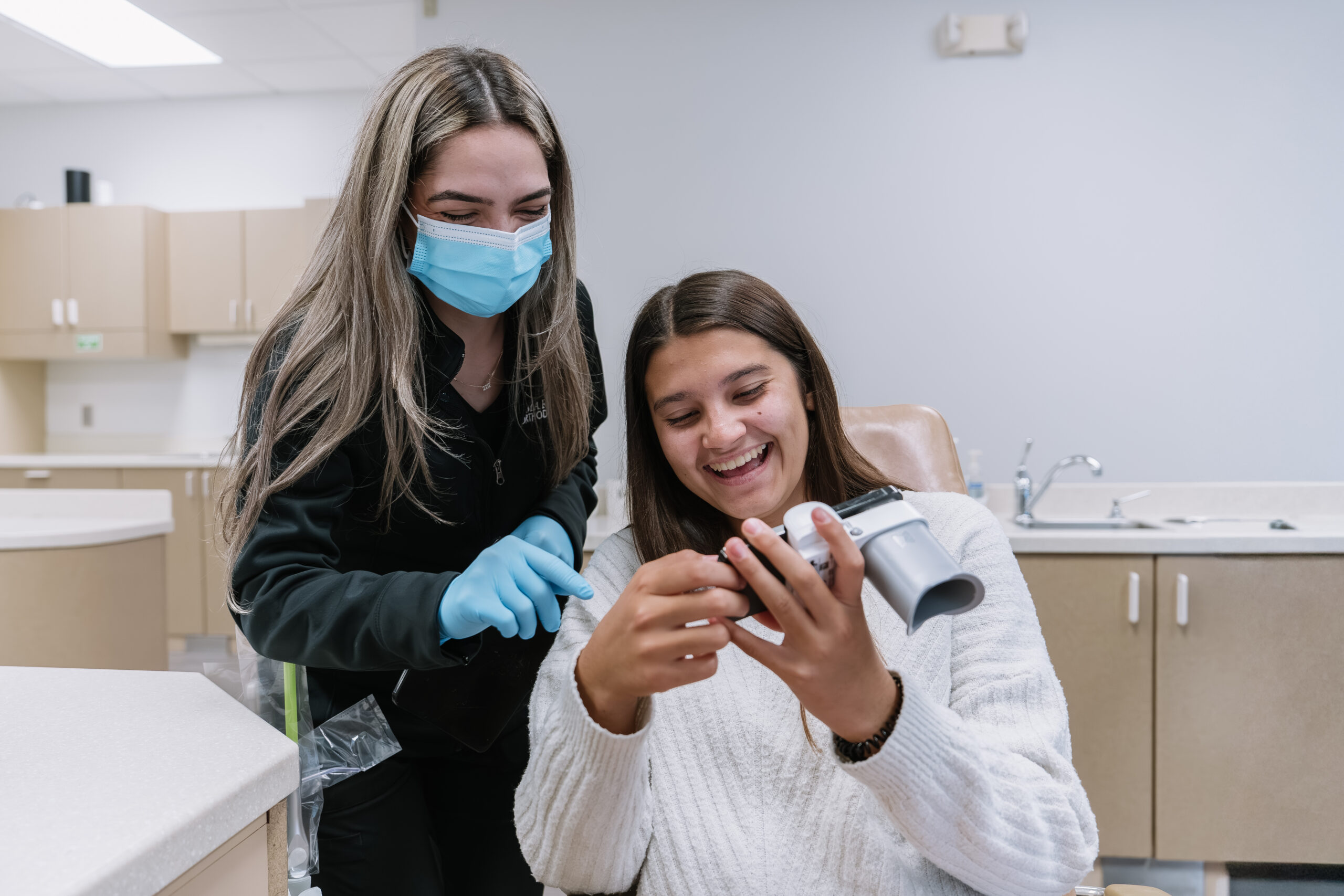
Starting braces used to mean biting into a tray of cold putty and holding still while it hardened. Not anymore. How digital impressions make braces more comfortable comes down to one swap: a small camera replaces the goop, and your custom plan starts from a precise 3-D file instead of a plaster model.
At Marris Orthodontics, quick 3-D scans handle everything from Invisalign clear aligners to custom-printed brackets. You sit back, we scan, and you see your teeth on screen before you stand up.
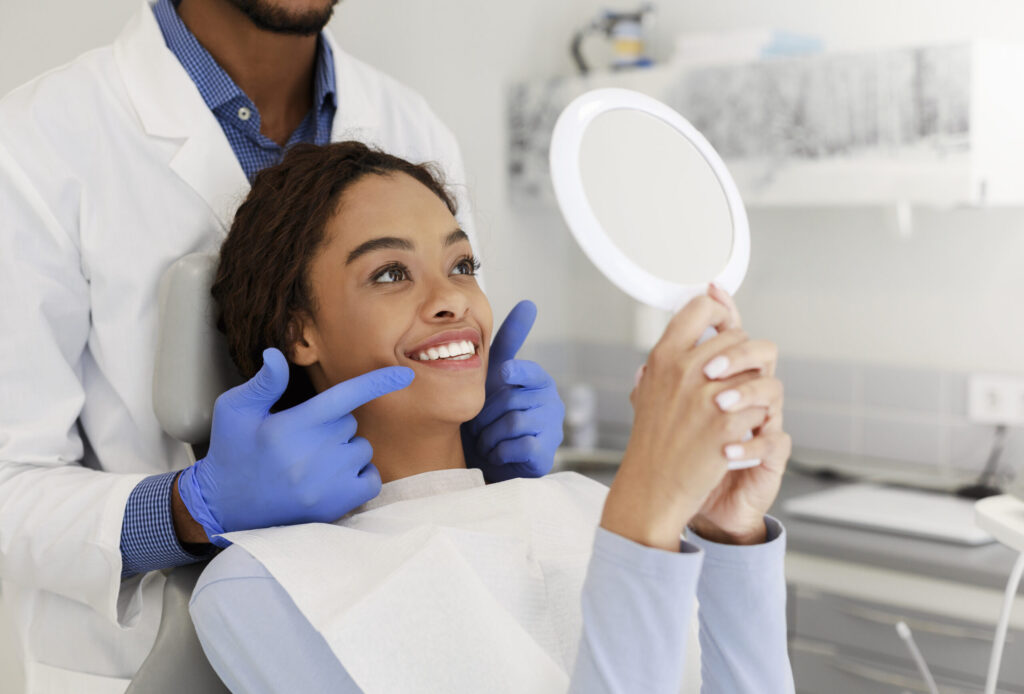
What Are Digital Impressions in Orthodontics?
A digital impression is a 3-D model of your teeth and bite captured by a handheld intraoral scanner in about five minutes. No trays, no putty, nothing sitting in your mouth. The scanner takes thousands of images and stitches them into one precise digital file that guides your custom plan.
You may hear the same visit described as digital dental impressions, an intraoral scan, or a 3D teeth scan. Different names, same idea: light and optics doing the job that sticky material used to do, with far less to endure in the chair.
That file does a lot of work. It feeds directly into treatment planning software, aligner design, and custom bracket fabrication, so nothing gets lost in translation between our all-digital orthodontic practice and the lab.
Dr. Kary Marris uses 3-D scans for:
- Invisalign clear aligners, where tray fit depends on exact tooth surfaces
- LightForce clear braces, where every bracket is 3-D printed for one specific tooth
- Invisalign palatal expanders for growing kids
- Retainers, including replacements down the road
Your scan lives in your digital chart. If you need a new retainer in two years, we can often pull the existing file instead of scanning you again.
How the 3D Scanning Process Works
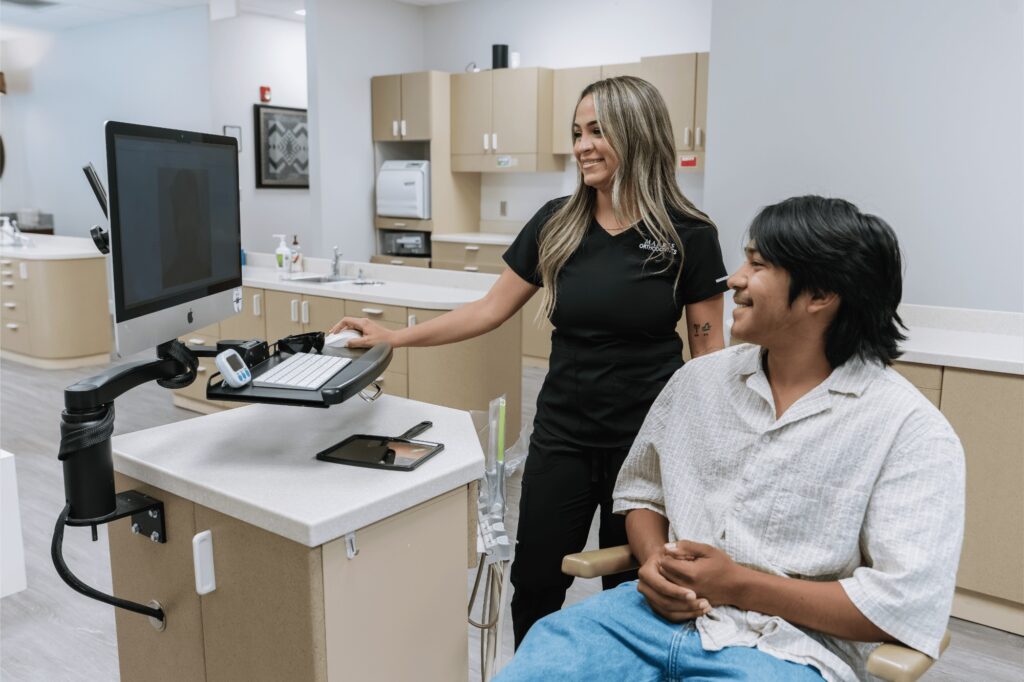
The 3-D scanning process takes about five to ten minutes. Our team lightly dries your teeth, then glides a small wand over your upper arch, lower arch, and bite. Images build on a chairside screen in real time, and you review the finished 3-D model with Dr. Marris before you leave.
Here’s the step-by-step:
- Quick prep. We clean and dry your teeth so the scanner reads every surface clearly.
- Upper arch. The wand glides along the outside, inside, and biting surfaces of your top teeth. It never presses into your gums.
- Lower arch. Same pass, bottom teeth. You can rest your jaw whenever you want.
- Bite scan. You close naturally while the wand captures how your teeth meet on each side.
- Review together. Your 3-D model appears on the monitor, and Dr. Marris walks you through crowding, spacing, and bite details you’ve probably never seen before.
Need a break? Say the word. The scanner picks up right where it left off, which is impossible once putty starts setting.
Why Digital Impressions Are More Comfortable Than Traditional Molds
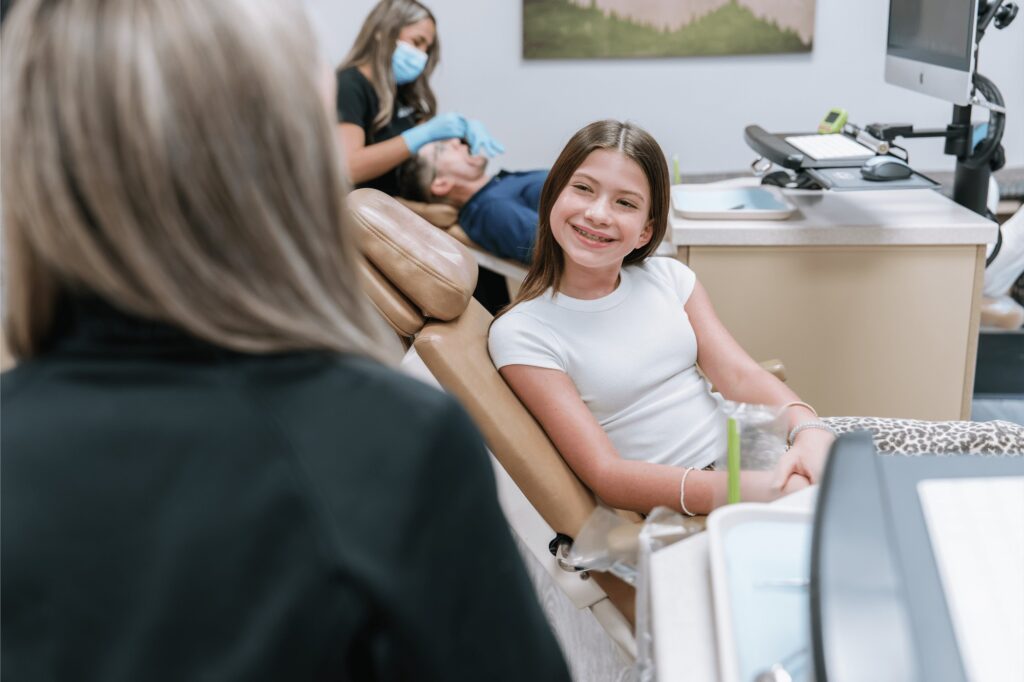
Comfort is what most families notice right away. There’s no material sitting at the back of your throat, so the usual gag trigger never gets pulled.
A few more reasons the experience feels easier:
- Nothing hardens in your mouth. You can swallow, pause, or reposition at any moment.
- Shorter chair time. No holding your jaw open while a tray sets, arch by arch.
- No redo rounds. Putty molds distort, trap bubbles, and sometimes have to be repeated. A digital scan shows gaps instantly, so we fill in that one small area instead of starting over.
- Kinder for sensitive gag reflexes. Patients who dread trays usually get through a scan without trouble.
- Easier with braces already on. The scanner reads around brackets and wires without pulling on anything.
- Better appliance fit. Precise data means aligners, expanders, and brackets seat properly, which cuts down on sore spots and rubbing.
That last point matters more than people expect. Sore spots often trace back to an appliance that’s slightly off, and a sharper starting model helps prevent them.
Side by side, the differences are easy to spot. Here’s how a scan from an intraoral scanner compares with the older tray-and-putty method, from the moment the wand switches on to the day your appliance is ready:
| Factor | Digital 3-D Scan | Traditional Putty Mold |
|---|---|---|
| Comfort | Wand glides over teeth, no material | Tray and putty fill the mouth |
| Time | About 5 to 10 minutes total | 3 to 5 minutes of set time per arch |
| Gag reflex risk | Low; you can pause anytime | Higher; material sits near the throat |
| Accuracy | High-resolution digital capture, no material distortion | Can distort, trap voids, or pull out of position |
| Remakes | Rescan a small section in seconds | Full arch often repeated |
| Transfer to lab | Sent electronically in minutes | Physically shipped |
| Storage | Saved in your digital chart | Stone models crack, warp, and take up shelf space |
| What you see | 3-D model on screen during your visit | A plaster copy, usually days later |
The on-screen part is underrated. Seeing your own bite rotate on a monitor makes the plan click in a way a paper explanation never does, especially for teens who want to know exactly what’s changing. Parents get the same benefit, since a shared screen turns a technical conversation into something everyone in the room can follow and ask questions about.
Who Benefits Most From Digital Impressions?
Honestly? Kids, teens, and adults all do. A few groups notice the upgrade most:
- Anyone with a strong gag reflex. No tray, no trigger.
- Younger kids who can’t sit still. A wand you can stop and restart beats a timer counting down.
- Adults choosing Invisalign clear aligners or LightForce clear braces. Both depend on precise digital data, so the scan isn’t optional, it’s the foundation.
- Kids needing an Invisalign palatal expander. Exact fit matters when you’re guiding jaw growth.
- Patients who want a preview. Seeing your bite in 3-D before day one answers a lot of questions.
- Families using DentalMonitoring. Your baseline scan gives Dr. Marris something to measure weekly photos against, so you can check in from anywhere.
If you’ve had a rough experience with molds before, mention it when you arrive. We’ll go slow and let you set the pace, pausing as often as you need until the scan is finished.
Frequently Asked Questions About Digital Impressions and Braces
Does a digital scan hurt?
No. The wand hovers over and around your teeth without cutting, pressing, or pinching tissue. Most patients say it feels like a small camera moving past their teeth, and the biggest complaint is usually holding your mouth open for a few minutes.
How long does a digital impression take?
A full 3D teeth scan usually takes five to ten minutes for both arches plus the bite scan. Scanning around existing braces can add a couple of minutes. You can pause whenever you need to swallow or rest, and the scanner resumes without losing progress.
Are digital scans more accurate than putty molds?
Yes, in the ways that matter for appliance fit. Digital capture avoids the material distortion, air bubbles, and pull-out errors that affect physical molds. The software also flags missing data on the spot, so we correct small gaps during your visit instead of discovering a problem after the model reaches the lab.
Can I get scanned if I already have braces on?
Absolutely. Intraoral scanners capture around brackets and wires just fine. We scan mid-treatment all the time to check progress, plan refinements, or design retainers before your braces come off.
Is digital scanning safe?
Yes. Intraoral scanners use optical imaging and visible light, not ionizing radiation, so there’s no exposure concern with repeat scans. That’s part of why we’re comfortable scanning at multiple points during treatment.
Do I need a new scan for a retainer?
Often not. If your teeth haven’t shifted, the file already in your chart can be used to fabricate a replacement. If it’s been a while or something has moved, a quick rescan brings your records current in minutes.
Who reads my scan?
Dr. Kary Marris does. University of Florida trained and a member of the American Association of Orthodontists, Dr. Marris reviews every 3-D model personally and builds the custom plan from it. Marris Orthodontics is also a LightForce Authorized Provider and an Invisalign Provider, with 20 years of expertise behind every case.
Curious what your own scan would show? A free consultation is the easiest way to find out.